Full curriculum
Explore music lesson by lesson. Browse the subjects below or search for a topic.
145 lessons
Jump to a subject
Times estimate a first pass through the explanation, listening and practice. Take longer whenever you need to.
Rhythm and meter
- 5–15 min
Find the beat
Describe a beat and explain why counting sounds is not always the same as counting beats.
- 5–25 min
Tempo and rhythm
Explain how tempo sets beat speed while rhythm arranges sounds and silences.
- 5–20 min
Explore note durations
Fit one, two or four notes into the same beat.
- 5–15 min
Group beats into measures
Use 4/4 and note values to count complete measures.
- 5–15 min
Split a beat
Fill a one-beat space with a note group of equal duration.
- 15–55 min
Change how durations are written
Hear how notes can last longer or share a beat, then compare the ways to write them.
- 3–10 min
Compose rhythms with notes and rests
Use notes, rests and at least two duration values to compose two different three-beat measures.
- 2–4 min
Single, double and paradiddle hand orders
Perform three right-left hand sequences across eight equal eighth notes at the chosen timing.
- 10–40 min
Meet different meters
Compare simple, compound and uneven meters through listening and notation, then identify their beat groups.
- 5–30 min
Accent and syncopation
Distinguish the beat from an accent, hear a note held across a beat, and recognize a pickup.
- 3–10 min
Hear and write rhythm
Reconstruct a four-beat rhythm with quarter notes, pairs of eighth notes and quarter rests.
- 10–40 min
Swing and groove
Identify subdivision timing by ear and edit a pattern with a stated timing intention.
- 5–20 min
Hear groups beyond the measure
Follow measures, compare two- and four-measure groups, and identify the audible clues for each grouping.
- 10–30 min
Hear layered rhythms
Place 2:3 and 3:4 on a shared timeline; calculate polymeter returns and identify contextual hemiola.
- 5–30 min
Tuplets and nested divisions
Divide a beat into three or five equal parts and calculate the duration and onset count of a nested division.
- 5–20 min
Free time and rhythm review
Calculate successive onset gaps on a timeline and distinguish acceleration from an exact duration requirement.
- 5–15 min
Regroup, add and remove rhythmic time
Distinguish regrouping from duration changes at a fixed note rate and calculate the resulting duration.
- 5–25 min
Metric modulation and rhythm review
Equate old and new note values to calculate the new tempo and duration relationship.

Music notation

- 3–10 min
Meet the staff
Explain how a notehead's position shows pitch, while the note's shape shows duration.
- 5–25 min
Note names
Match the seven natural-note letter names with their Do–Re–Mi syllables.
- 5–25 min
Where note names came from
Explain the two naming traditions and review their history alongside the note-name matches.
- 5–20 min
Octaves
Explain why C4 and C5 share a note name, differ in register, and sit one octave apart.
- 20–55 min
Read notes on the staff
Read natural notes in treble and bass clefs by starting from each clef's reference line.
- 10–40 min
Read a short melody
Read a short melody by identifying its clef, following notehead positions, and checking the phrase by listening.
- 15–45 min
Navigate a score
Derive the performance order of a short score using its written navigation marks.
- 10–30 min
Dynamics, tempo and articulation
Interpret loudness, tempo and articulation instructions separately and compare them with the sound.
- 5–20 min
Ornaments and performance-marking review
Write turns, lower mordents and trills around a new principal note under the stated style convention.
- 5–20 min
Transpose a melody to another key
Transpose a short melody by the requested interval while preserving letter relationships and semitone distances.
- 5–30 min
Written and sounding pitch
Derive a transposing instrument's written part from concert pitch and apply octave conventions and 8va or 8vb.
- 5–25 min
Clefs and transposition review
Read alto and tenor clefs and rewrite the same sounding pitches in another clef.


Pitch and intervals
- 10–40 min
Pitch and register
Hear whether the second note is higher or lower than the first.
- 10–40 min
Semitones and accidentals
Identify semitone and whole-tone distances and explain what an accidental changes.
- 20–60 min
Identify and build intervals
Count note letters and semitones separately to build an interval with the requested number and quality.
- 5–20 min
Interval inversion and shared review
Move a note by an octave to invert an interval and reduce a compound interval to its simple form.
- 5–20 min
Frequency, amplitude and period
Calculate pitch direction and period from frequency and distinguish amplitude changes from frequency changes.
- 5–25 min
Timbre and shared acoustics review
Compare how harmonic balance, attack and resonance affect spectrum and timbre at a fixed fundamental frequency.
- 10–35 min
Tuning systems
Compare equal-tempered and ratio-based interval sizes using cents.
Listening and ear training
- 10–40 min
Listening, attention, and musical memory
Distinguish immediate pitch comparison, melodic contour, and delayed recognition with separate audio responses.
- 5–20 min
Compare timbres by ear
Distinguish piano, flute and clarinet examples from their attack and sustained-sound characteristics.
- 5–15 min
Hear changes of texture
Hear a bass layer enter beneath an unchanged melody and identify the relationship between layers.
- 15–55 min
Melodic returns and listening review
Identify melodic returns independently of the sound source and place them on a timeline.
- 5–20 min
Read fixed and movable Do
Use the tonic and the chosen system to name the same notes in fixed and movable Do.
- 10–35 min
Sight-singing and solfege review
Attempt new notation from a starting reference before hearing the model and compare pitch and timing separately.
- 2–10 min
Recognize intervals by ear
Distinguish minor thirds, major thirds, perfect fourths and perfect fifths from the same starting note.
- 4–15 min
Hear scale degrees and scale quality
Use a tonic reference to identify scale degrees and distinguish major from natural minor by ear.
- 5–30 min
Reconstruct a melody and its rhythm
Reconstruct a melody's degree sequence and note durations through separate listening passes.
- 20–60 min
Outer voices and ear-training review
Follow the top line and bass separately to identify degree sequences in two- and four-voice examples.
- 10–35 min
Hear chord bass and quality
Identify a chord's lowest note and distinguish major from minor quality by ear.
- 5–15 min
Hear chord inversions
Given a chord root, use the lowest note's role to identify root position or the first or second inversion.
- 5–30 min
Cadences and chord-listening review
Use a tonal reference to hear chord functions and the ending of a progression.



Scales and keys
- 10–35 min
Build major scales
Build a major scale from a new root with seven distinct note letters and the correct interval pattern.
- 15–50 min
Natural, harmonic and melodic minor
Build three minor forms and compare their leading-tone approach and smoother ascending route.
- 15–50 min
Read key signatures
Read accidental order to identify major and relative-minor candidates, including empty and one-flat signatures.
- 10–35 min
Construct key signatures
Write the complete sharp or flat order for a new major key and apply the C-major and F-major exceptions.
- 5–20 min
The circle of fifths
Move from C in both directions to find accidentals and recover a major candidate from its signature count.
- 10–40 min
Relative keys and key-signature review
Distinguish parallel and relative keys and evaluate candidates using degrees, bass, leading tones and melodic arrival.
- 20–60 min
Learn about modes
Compare seven-note patterns and use the changed notes and melodic returns to distinguish them.
- 10–30 min
Minor-scale modes and modal review
Derive modes of harmonic and melodic minor while preserving spelling and use characteristic degrees in a phrase.
- 10–35 min
Pentatonic and blues scales
Build major and minor pentatonic scales, add a blues pitch and use it in a new short phrase.
- 5–15 min
Symmetric pitch collections
Build whole-tone, octatonic and augmented collections from repeating steps and identify a preserving transposition.
- 10–30 min
Bebop and pitch-collection review
Choose a passing note and calculate which chord tones fall on numbered beats from a specified eighth-note start.
- 10–30 min
Alternative pitch collections
Separate pitch selection, tuning, and melodic practice using a calculation and evidence from named sources.

Melody and accompaniment
- 15–60 min
Melodic idea, contour, and motif
Change a motif ending within a chosen scale, then develop a new motif through three different transformations.
- 5–25 min
Hear phrase structure and write a continuation
Identify a starting phrase's boundary and motif and write more open and more closed continuations.
- 4–15 min
Expand and redirect a phrase
Compare a phrase with its model to explain changes of duration, overlapping boundary or tonal arrival.
- 10–40 min
Bass lines and ostinato
Create two bass lines over a new progression and explain their rhythmic, melodic and harmonic roles.
- 10–35 min
Melody and accompaniment
Create two contrasting accompaniments for a melody while explaining their chord and voice relationships.
Chords
- 20–65 min
Triad chords
Build the four common triad qualities from a new root and explain which chord tone changes.
- 35–105 min
Seventh chords
Build common seventh chords and identify their triad and seventh intervals separately.
- 15–50 min
Chord inversions
Identify chord position and arrange the remaining tones above a fixed bass within one octave.
- 5–25 min
Slash chords
Identify the named chord and bass and check whether the bass belongs to that chord.
- 10–40 min
Inversion figures
Derive 6, 64, 7, 65, 43 and 42 from the current bass before combining them with a key.
- 15–60 min
Roman numerals and inversion review
Use the key to identify I or V, combine the bass figure and complete the comprehensive inversion review.
- 30–100 min
Chord voicings
Arrange a new chord within a given voice count and range while preserving chord identity and required common tones.
- 10–45 min
Extended, added and altered chord symbols
Translate sevenths, extensions, added tones, suspensions, alterations and omissions into chord notes.
- 20–60 min
Alternative chord structures and symbol review
Distinguish a slash bass from two complete triads and build quartal, quintal and cluster structures.


Harmony
- 20–60 min
Diatonic harmony and function
Build diatonic triads and seventh chords, identify their degrees, and use phrase context to explain tonic, predominant, and dominant roles.
- 10–40 min
Chord progressions and root relationships
Distinguish root movement from the bass and transpose a progression's degrees and chord qualities.
- 5–15 min
Harmonic rhythm
Arrange harmony changes at a fixed melody and tempo and distinguish repeated attacks from new harmonies.
- 5–25 min
Tonic prolongation and progression review
Show a larger tonic area without losing the actual surface chords in a neighbor-bass progression.
- 20–70 min
Cadence and harmonic closure
Identify cadences from bass, melody, and harmonic context, then change the final harmonies to create closed, open, deceptive, or evaded arrivals.
- 10–40 min
Melodic non-chord tones
Distinguish melodic non-chord tones by chord membership, direction, approach and accent.
- 5–15 min
Suspension and retardation
Prepare a consonant note, hold it across a harmony change and resolve it late in the appropriate direction.
- 10–35 min
Pedal points and non-chord-tone review
Retain a bass note through changing harmonies and identify when it belongs to each chord.
- 25–80 min
Four-part writing and basic voice leading
Connect and repair four-part harmonies while preserving voice range, order, spacing, suitable doubling, tendency-tone resolution, and independent motion.
- 20–75 min
Secondary chords and tonicization
Construct and resolve applied dominants and leading-tone chords for new targets, then distinguish temporary tonicization from a change of tonal center.
- 15–50 min
Modulation and evidence for a new key
Identify the old center, transition and new cadence through pivot-chord, direct, common-tone and sequence routes.
- 10–35 min
Chromatic modulation and key-change review
Reinterpret a borrowed chord or augmented sixth and verify the new center through its following cadence.
- 5–30 min
Modal mixture and borrowed chords
Borrow iv or another chord from the parallel mode while retaining the tonic and tracing altered-degree resolutions.
- 5–15 min
The Neapolitan sixth
Build N6 in a new minor key, distinguish bass from root and connect the lowered second to the dominant.
- 15–50 min
Augmented sixths and modal-mixture review
Build Italian, French and German sixths and distinguish their outward resolution from an enharmonic dominant seventh.
- 5–20 min
Chromatic triad relations
Compare triad roots, common tones and changing voices and distinguish P/L/R relations from chromatic mediants.
- 5–25 min
Chromatic lines and common-tone decoration
Identify the underlying harmony, common tones and neighbor motion in line clichés and CT+6 examples.
- 5–15 min
Harmonic elision
Build a chord that redirects an expected tonic arrival and distinguish leading-tone and raised-root elision.
- 10–35 min
Omnibus and chromatic harmony review
Complete contrary chromatic lines over fixed inner voices to form an omnibus progression.



Musical form

- 10–40 min
Small Forms
Distinguish binary, rounded-binary, and ternary designs using musical evidence.
- 5–20 min
Rondo returns and variation review
Trace refrain returns and larger form layers by bar ranges and compare tonal roles in sonata-rondo.
- 5–20 min
Theme variation and repeated bass
Identify the phrase and harmonic relationships retained in variations and distinguish a repeated bass from its changing upper line.
- 10–35 min
Trace fugue subjects, answers and episodes
Trace subject identity, answer level and overlapping entries and distinguish a full entry from developing material.
- 4–10 min
Inventions, fugues and imitation review
Compare cell development, recurring countersubjects and independent subject combinations using bar and voice evidence.
- 10–35 min
Sonata functions and tonal return
Identify exposition, development and return using themes, tonal areas and cadences, including K.545's return in F major.
- 4–10 min
Concerto and sonata-form review
Trace ensemble returns, solo roles and the bass and tonal route through a complete concerto movement.
- 15–50 min
Whole-Work Analysis
Support an interpretation with observations from several musical dimensions and state its limits.
Counterpoint and texture
- 10–35 min
Texture and musical layers
Compare layer roles and transform a new melody from one line into a contrasting texture.
- 10–40 min
First-species counterpoint
Write a note-against-note upper line above a new cantus and check consonance, independence and the final contrary steps.
- 3–10 min
Second-species counterpoint
Write two half notes against each whole note and connect weak passing dissonances by step.
- 4–10 min
Third-species counterpoint
Write four quarter notes against each whole note and apply passing, neighbor and bounded cambiata patterns.
- 3–10 min
Fourth-species counterpoint
Prepare a consonance, tie it across the barline and resolve the strong-beat dissonance downward by step.
- 10–35 min
Fifth species and counterpoint review
Combine half notes, quarter notes and prepared suspensions while preserving each dissonance rule.
- 5–15 min
Imitation, canon and transformations
Build an imitation at the specified entry time and interval, augment durations and exchange the voices' registers.
- 10–40 min
Renaissance counterpoint and imitation review
Align an imitative entry with word stress and tactus and resolve a weak-beat passing dissonance.
- 15–50 min
Galant schemata and historical models
Identify recurring upper-voice and bass patterns, transpose their core relationship, and use a schema in a short phrase.
Composition and arrangement
- 10–40 min
Compose from a small idea
Compose a four-bar melody with a repeated seed, a variation, and an ending on C.
- 10–45 min
Adapt and arrange an idea
Adapt a short idea for a new context and explain which features remain recognizable.
- 10–35 min
Listening, analysis, and a music portfolio
Apply a learned skill to an unfamiliar example and describe the evidence and limits of the result.
Popular music
- 4–10 min
Song sections and their roles
Distinguish verse, chorus and contrasting-section roles and map the song's returning main idea.
- 5–20 min
Hooks, word stress and song-form review
Write a repeating melody for four new syllables, align the intended word stress with musical accents and place the hook on a song map.
- 10–40 min
Rhythm and Genre in Popular Music
Compare and revise a new groove through onsets, accents, timing, and timbre while keeping genre claims tied to context.
- 10–35 min
Harmonic Patterns in Popular Music
Compare possible tonal centers using a chord loop, its bass, and its melody.
- 10–35 min
Layers, Arrangement, and Transitions
Explain how changes in musical layers create contrast and connect song sections.

Jazz
- 10–40 min
Blues and Jazz Forms
Track chorus and section boundaries, then create a phrase-positioned variation without moving harmonic landmarks.
- 20–60 min
Jazz Chord Voicings
Accompany a new lead-sheet excerpt with shell and rootless voicings, guide-tone motion, and a deliberate comping choice.
- 15–50 min
Jazz Progressions and Reharmonization
Reharmonize a new progression while preserving the lead melody and explaining the target, bass route, and voice motion.
- 10–40 min
Jazz Improvisation
Develop a short motif within a stated chord progression and phrase plan.
Music history
- 15–45 min
Place music in historical context
Support a contextual interpretation with musical evidence and a relevant source.
- 20–65 min
Medieval and Renaissance music
Compare an unfamiliar early-music excerpt using evidence from its texture, notation, and context.
- 20–65 min
Baroque and Classical music
Compare two works using musical evidence and a source about their historical setting.
- 20–60 min
Romantic music to the present
Interpret an unfamiliar work with musical and historical evidence without presenting styles as a single timeline.

Contemporary techniques
- 10–35 min
Pitch Languages of the 20th and 21st Centuries
Analyze a new excerpt through pitch collection, centers and layer movement; support a reading and consider an alternative.
- 5–25 min
Pitch-class sets and transformations
Reduce notes to distinct pitch classes and calculate Tₙ and Iₙ images, common members and set invariance.
- 10–35 min
Set forms, vectors and transformation review
Calculate normal order, prime form and interval vectors under the stated convention and distinguish vectors from T/I equivalence.
- 10–30 min
Twelve-tone rows and matrices
Calculate P, I, R and RI for a new row modulo 12, construct its matrix and read it in four directions.
- 10–35 min
Serial relations and twelve-tone review
Identify serialized parameters and compare order, invariant membership and hexachord complementarity.
- 5–20 min
Musical rules, chance and audible processes
Distinguish fixed rules from open choices and turn a new seed into an additive or phase-shifting process.
- 5–15 min
Graphic scores and process-composition review
Propose a consistent mapping for an unkeyed graphic, realize it and compare its decisions with a process piece.
Instruments and orchestration
- 10–40 min
Timbre and sound experiments
Change one sound parameter while holding pitch and duration fixed; compare envelope, spectrum and listening observations.
- 5–20 min
Instrument families and sound production
Explain how sound is produced and compare the timbres of different sources playing the same notes.
- 20–65 min
Registers, roles and instrument review
Choose a suitable role by comparing written notes with the source's range and the performer's comfortable register.
- 10–40 min
Orchestration and writing for instruments
Make and explain a small-ensemble arrangement that respects each instrument's written and sounding range.
- 15–45 min
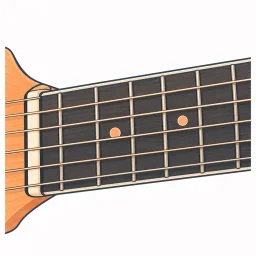
Find notes and intervals on fretted instruments
Use the displayed tuning to find notes and locate the same interval across different strings.
- 15–55 min
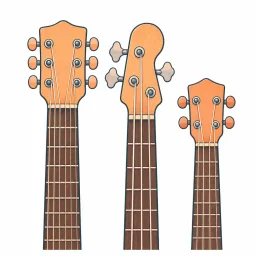
Chord shapes and fretboard review
Verify guitar, bass and ukulele chord shapes from their tuning and fret numbers.
- 20–60 min
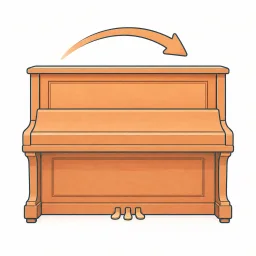
Apply theory at the keyboard
Locate and transpose a short idea on the keyboard while keeping its intervals intact.