All learning paths
Choose a goal that matches your interests and experience. You can change paths at any time.
Levels describe the knowledge needed to start. Times are rough estimates for the core lessons; optional work takes extra time.
Available paths
Choose a learning path
Start with music
Find the beat, compare tempo and rhythm, and explore note lengths through short listening examples.

Note names and staff reading
Learn how note names map to the staff, then read short melodies in treble and bass clefs.
Rhythm and meter
Use rhythm, accent and time groups while maintaining a pulse.
Pitch and intervals
Learn pitch direction, build intervals and recognize short melodies by ear.
Scales, keys and modes
Construct pitch collections and use their relationships to a tonal center.

Build and voice chords
Build triads and common seventh chords, change their bass, and arrange the same chord in basic voicings.
Tonal and chromatic harmony
Analyze and create chord connections, temporary centers and key changes.

Ear training and solfège
Develop aural discrimination, memory and sound–notation relationships without visual answer cues.
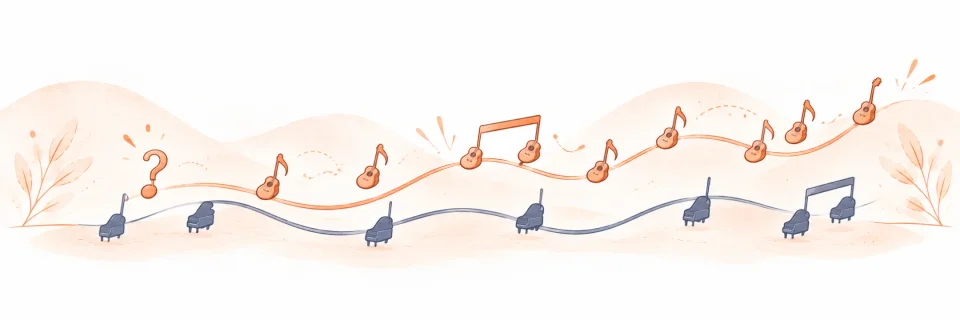
Melody and bass lines
Connect motifs, phrases, bass and accompaniment into a coherent musical idea.
Voice leading and counterpoint
Connect independent musical lines with purpose.
Musical form and analysis
Infer musical structure from sections, themes, tonal plans and textures.
Jazz language and improvisation
Use harmonic, rhythmic and formal relationships for jazz accompaniment and improvisation.
Popular music and songwriting
Connect groove, chord loops, hooks and sections into a song idea.
Contemporary music techniques
Use pitch, time, texture and process beyond tonal practice.
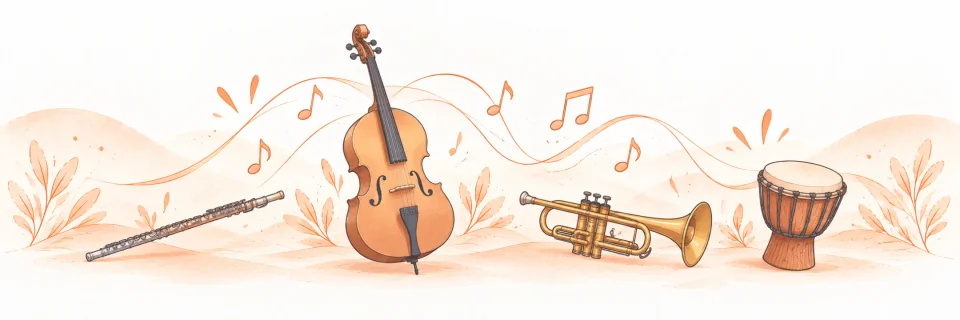
Instruments, timbre and orchestration
Distribute musical roles according to sound production and instrument characteristics.
Composition and arrangement
Combine musical constraints and creative decisions in manageable projects.
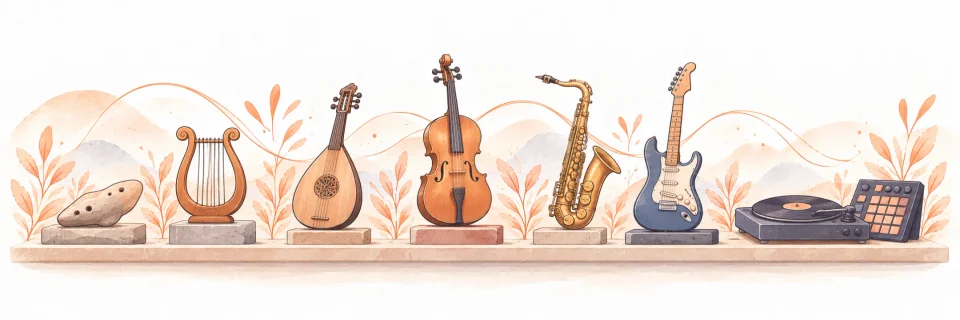
Music history, genres and styles
Relate musical language to historical and cultural contexts.
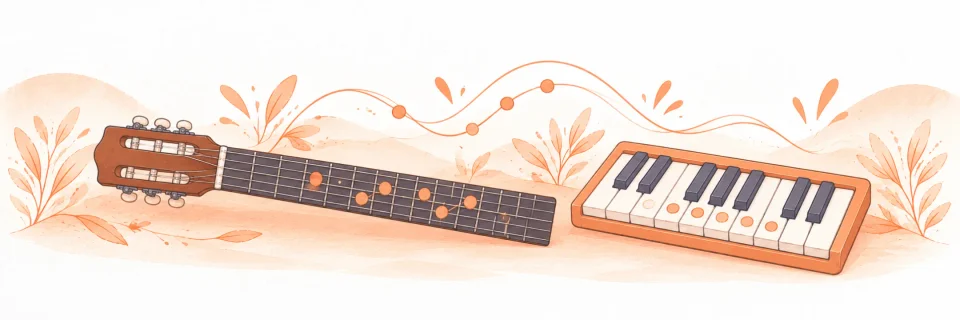
Apply theory to an instrument
Apply shared musical relationships to the positions and movements of a chosen instrument.
Musical traditions and how cultures organise music
Study pitch, time, form and improvisation within the contexts of different traditions.
Music for stage, film and games
Design music for a dramatic, visual or interactive purpose.